
To enable children with different skills to learn together
“I don’t understand the story of ‘Yamanashi.’”, “I was surprised there was no punchline.” – Opinions like these were heard from sixth graders with regard to Kenji Miyazawa’s literary masterpiece. However, by the end of the lesson, the children were interpreting for themselves the metaphorical expressions and descriptions of color in his work, and having a heated debate as to “why this is the title.” What brought about this change was the “guarantee of diverse ways of learning” using generative AI.
At Koganei Elementary School affiliated with Tokyo Gakugei University, I work on “ICT x Inclusive Education,” in which ICT is used to achieve inclusive education. In this paper, I would like to introduce “Inclusive Approaches to Diverse Form of Learning” in the age of generative AI, illustrated with concrete classroom practices.
The redefinition of “Reading, Writing and Asking Questions” and Unlock Learning
Underlying my methodology is the idea of “Reading, Writing and Asking Questions” that I learned from Professor Ichio Numano, my mentor when I was an undergraduate student. “Reading” does not simply mean decoding written text; rather, it refers to the ability to understand accurately information provided by others. Likewise, “writing” does not merely involve putting words on paper, but denotes the ability to convey accurately to others what you want to communicate. In this sense, if information can be properly understood, listening to synthesized speech is perfectly acceptable; and if ideas can be effectively communicated, inputting text on a tablet is equally valid. Above all, however, it is the capacity to question—to ask “Why is this so?”—that is considered most crucial in the coming era.
This way of thinking has become the foundation of my approach to ICT x Inclusive Education. Encouraging a child who struggles with handwriting to write using a tablet, as well as making use of text-to-speech functions in digital textbooks for learners, can both be seen as extensions of this idea.
And now, the advent of generative AI has greatly expanded the potential for ICT x Inclusive Education. To the practice of helping children expand their boundaries of learning by removing or changing the shape of the “framework” of learning, we have given the name “Unlock Learning”; and we are continually putting it into practice. In a traditional class, there was an established flow; “First write your own sentences, then present them to each other.” However, children who do not fit into this “framework” sometimes do not even come close to the doorway to learning. Generative AI has the potential to become a powerful tool that can flexibly change this kind of “framework.”
Generative AI opens the door to “Personalized Learning” ―From the lesson on “Yamanashi”
In the lesson on “Yamanashi” mentioned at the beginning of this paper, I presented to the children three ways of learning. The first method was “Think for yourself from scratch and write down your thoughts.” The second method was to use “AI to answer small questions”; the AI asks a series of questions such as, “At the beginning of the story, what were the crab brothers talking about?” and the children answer the questions as they reread the textbook. The third approach involves “having the AI create a story for a month not depicted in the original work.” By asking AI to generate a story for a month that falls between “May” and “December” in the original work, students examine the author’s narrative techniques and the structure of the text.
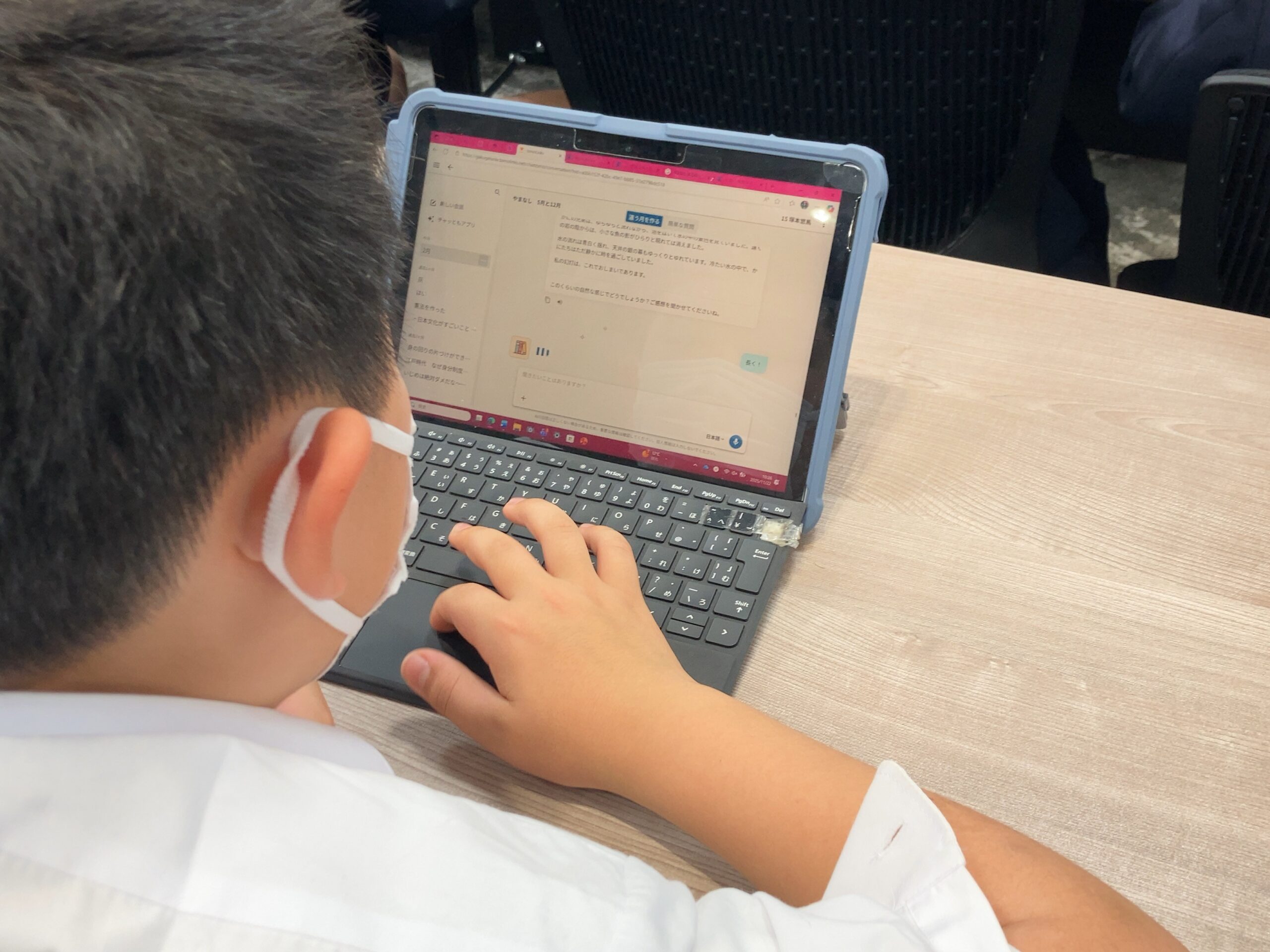
Using AI to create a story for a month not depicted in the original work
What was noteworthy was that, whichever method they chose, the children ultimately ended up thinking deeply about the contrast between “May” and “December”. A child who chose to use “AI to answer small questions”, even though they usually had difficulty organizing written text, reread the work carefully through dialogue with the AI and arrived at their own interpretation. Another child, who selected “having the AI create a story for a month not depicted in the original work,” began to recognize the sophistication of Kenji Miyazawa’s metaphorical expressions while revising the text generated by the AI, making comments such as, “This doesn’t feel like something Kenji Miyazawa would write.”
This is precisely what lies at the heart of inclusive education combined with the use of AI. Children with diverse skills can participate in learning in ways personally suited to the individual child; and what is more, everyone can enhance their thinking processes while working toward the same learning goals. There are those who criticize the use of AI, saying that “AI stops children thinking”; but that depends on how it is used. If anything, AI has the potential to be the ideal tool to open the door to participation for children who until now were unable to approach the doorway to learning, and to give such children the opportunity to think for themselves.
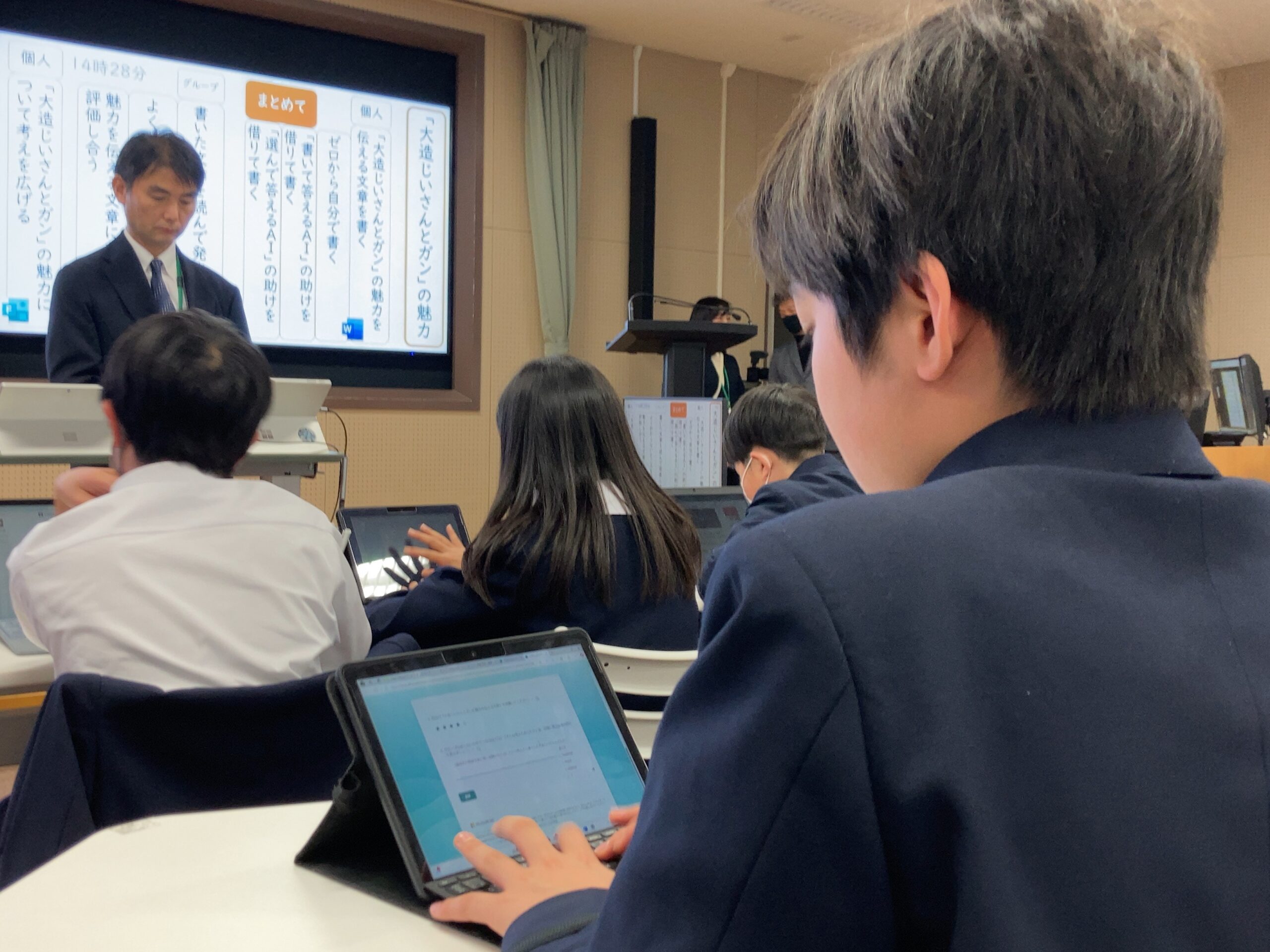
The tablet is an essential tool in the modern classroom
Suggestions for dealing with universal challenges
While demonstrating classes to 19 trainee participants from 15 countries who were visiting Japan for the 2025 JICA Knowledge Co-Creation Program “Strengthening Inclusive Education System for Children with Disabilities”(*1), I realized that such issues as “addressing diverse learning needs,” “teacher training” and “the gap between theory and practice” are challenges that are common to every country.
The implementation of Unlock Learning using generative AI demonstrates one approach to these challenges. What is important is that AI should be positioned not as something that “provides answers”, but as “a support that enables a child to think for themselves.” And that support can vary depending on the child. Removing the framework whereby “everyone learns in the same way” and switching to the idea that “everyone works towards the same goal in the way that best suits the individual” is the key to the achievement of truly inclusive education.
If there is anything that stands in the way of Unlock Learning, that might be our own assumptions as teachers. “In a class where pupils are asked to write something, it has to be written by hand, not on a tablet.” “Everyone should be made to tackle things in the same way.” – fixed ideas like these are probably not unique to Japan. In my conversations with them, many participants in the training program expressed such opinions as “Teachers in regular classes lack the ability to deal with children with disabilities” and “What we learned on our teacher training courses is not being put to use in the classroom.” Could it be that what lies behind this state of affairs is the preconceived notion in each country that “This is the way education should be?”
Generative AI has the potential to be a powerful tool in overcoming such convictions. For a single teacher working alone to provide different support for 30 children is difficult in practical terms. However, the use of AI makes it possible to provide each child with an entry point into learning that is suited to that child. What is important is not what we can make AI do, but to look at how with AI we can unlock learning for the children.
We are still only halfway along the path to our goal, but we want to continue exploring the potential of “Inclusive education combined with the use of AI” and to share the insight both within Japan and overseas. It is our hope that Japanese educational practices will be able to contribute globally to making the classroom a place where children with different skills learn and grow together.
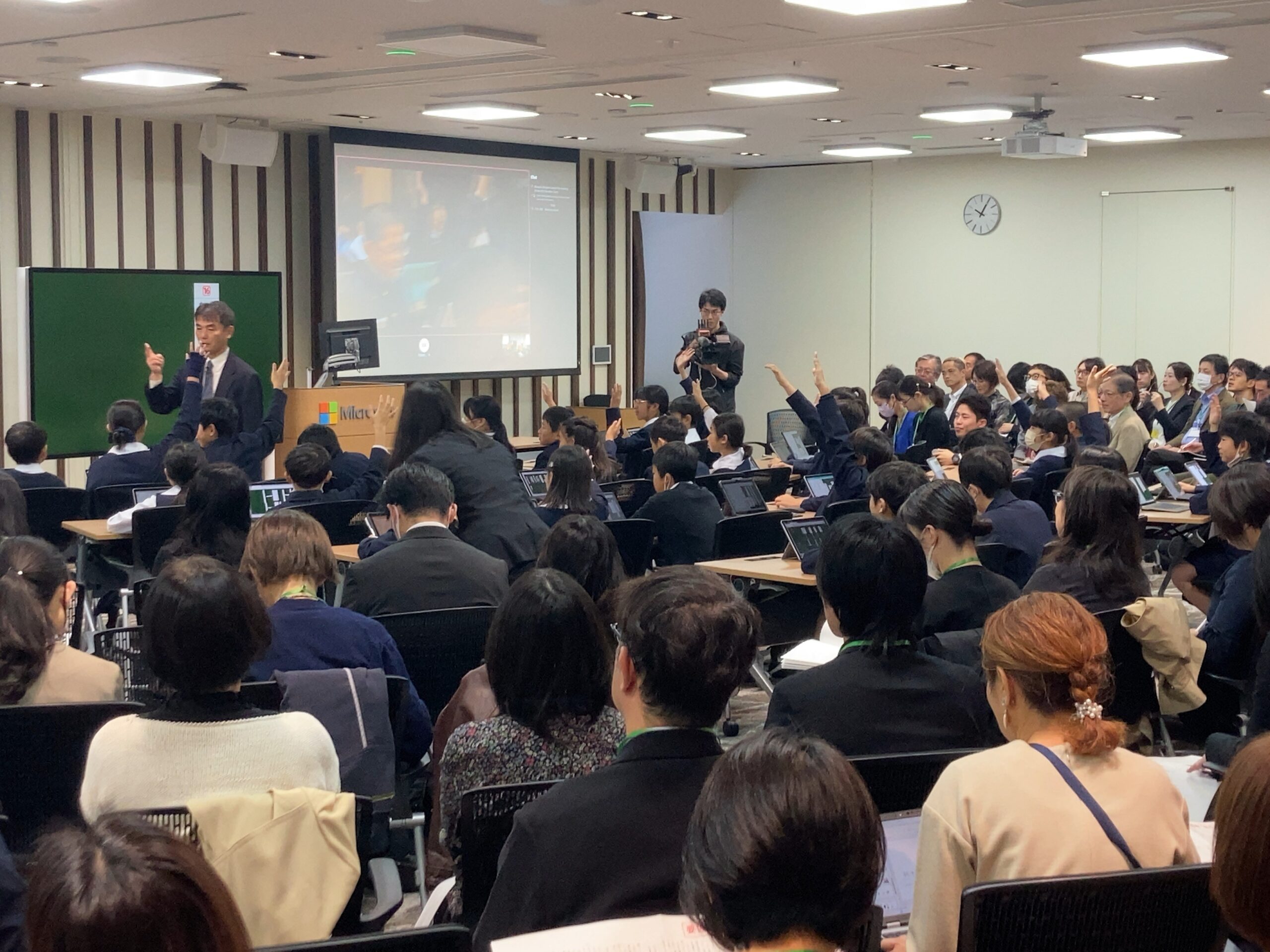
Demonstration lessons using generative AI attract a lot of interest.
(*1) Organized primarily by the JICA Yokohama Center, this training program targets educational administrators and key personnel involved in educational policy planning in developing countries. Its aim is to share information about Japan’s inclusive education/ special needs education and examples of flexible system design such as the provision of diverse learning environments to meet individual educational needs, and to formulate action plans for the construction and improvement of inclusive education systems that match the circumstances of each country.
■Profile of the Author
SUZUKI Hideki
Teacher at Koganei Elementary School affiliated with Tokyo Gakugei University. Part-time lecturer at Keio University. Staff member at the Tokyo Gakugei University ICT Center. Completed the Master’s Course in Education at Keio University Graduate School of Human Relations. Taught at a private elementary school before moving to his current position in 2016. In 2024 served as a member of Ministry of Education, Culture, Sports, Science and Technology’s advisory committee responsible for revising the Guidelines for the Use of Generative AI in Primary and Secondary Education. His main focus is on Inclusive education using ICT, Digital textbooks for learners, Lesson development using generative AI, etc. He shares information widely mainly through demonstration lessons held three to four times a year. Recent publications; “Developing ‘Unconventional Lessons’; 40 Questions to Fall Back on When You’re Struggling” (pub. Meijitosho), “Unlock Learning; Supporting Unique Talents in Specific Areas Leads to Learning Opportunities for All Children” (co-authored with Makiko Sato, pub. KanekoShobo).