
On March 5, 2026, Mr. Paulo Santiago, Head of the Policy Advice and Implementation Division of the Directorate for Education and Skills of the Organization for Economic Co-operation and Development (OECD), visited Tokyo Gakugei University Oizumi Elementary School located in Nerima City, Tokyo. The Ministry of Education, Culture, Sports, Science and Technology (MEXT) and the EDU-Port Secretariat arranged the visit to Oizumi Elementary School as part of the program, viewing it as an opportunity to introduce distinctive features of Japanese education to overseas visitors.
The OECD Directorate for Education and Skills is a department that carries out surveys and analyses of education policy and skills development on an international scale, and the Policy Advice and Implementation Division provides member countries and partner countries with evidence-based policy recommendations on a wide range of educational policies, covering the full spectrum of education, from elementary and secondary education to higher education. Since joining the OECD, Mr. Santiago, who made the visit to Japan on this occasion, has been in charge of international comparative reviews covering a variety of fields including teacher policy, higher education policy, equality in education, educational evaluation and assessment, the use of resources in school education, and educational finance. This was his first visit to observe a Japanese school in person.
After arriving at the school, Mr. Santiago was given a brief overview of the school by the Principal Tadashi Aoyama and the Vice-Principal Koichi Hosoi. Founded in 1938, the school is accredited as both an International Baccalaureate (IB) World School (Note 1) and a UNESCO Associated School (Note 2). It promotes international education based on experiential learning, inquiry-based learning, and collaborative learning, together with moral heart education, enriched school activities, and the development of solid academic skills. The visit introduced how the school fosters students’ initiative, collaboration, and social skills through a variety of activities. In addition to school events such as the sports festival, music festival, and seaside school program, students engage in hands-on learning experiences—for example, each student grows a chrysanthemum plant, fifth-grade students walk along the stone-paved Hakone Old Highway wearing straw sandals they have made themselves, and mixed-age groups participate in cooperative activities.
-
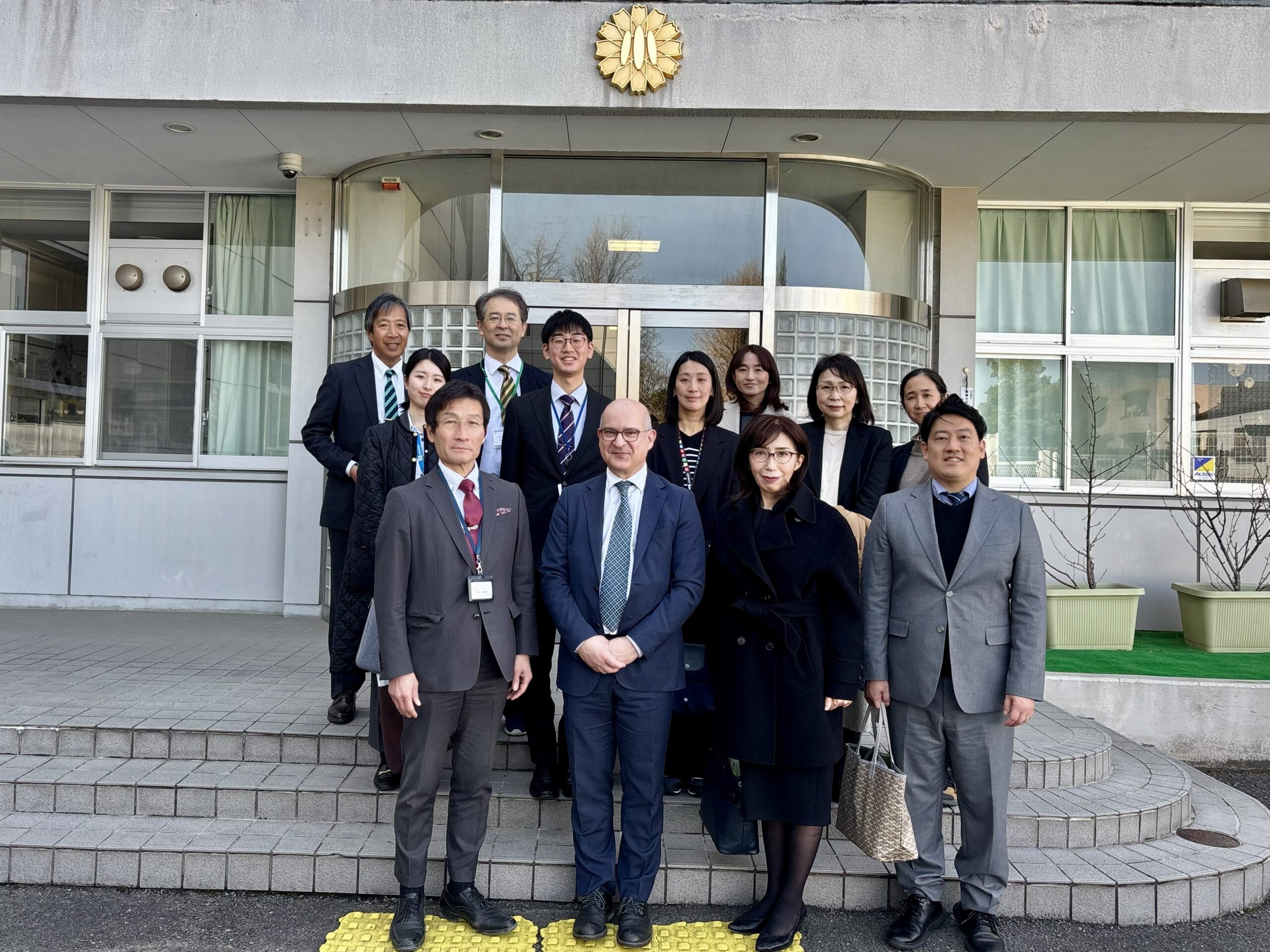 Group photo taken in front of Oizumi Elementary School
 -
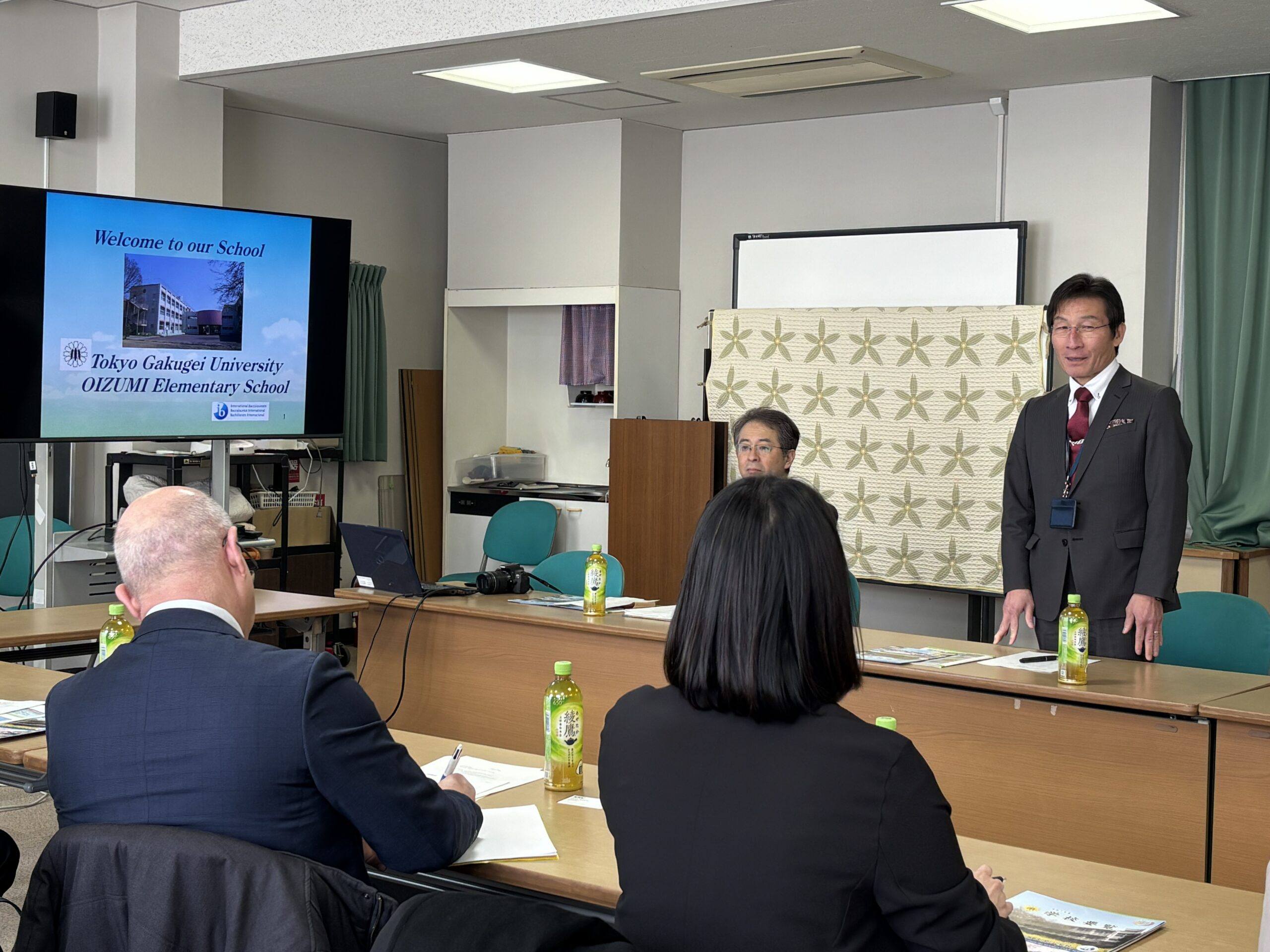 Principal Aoyama welcomes the visitors
-
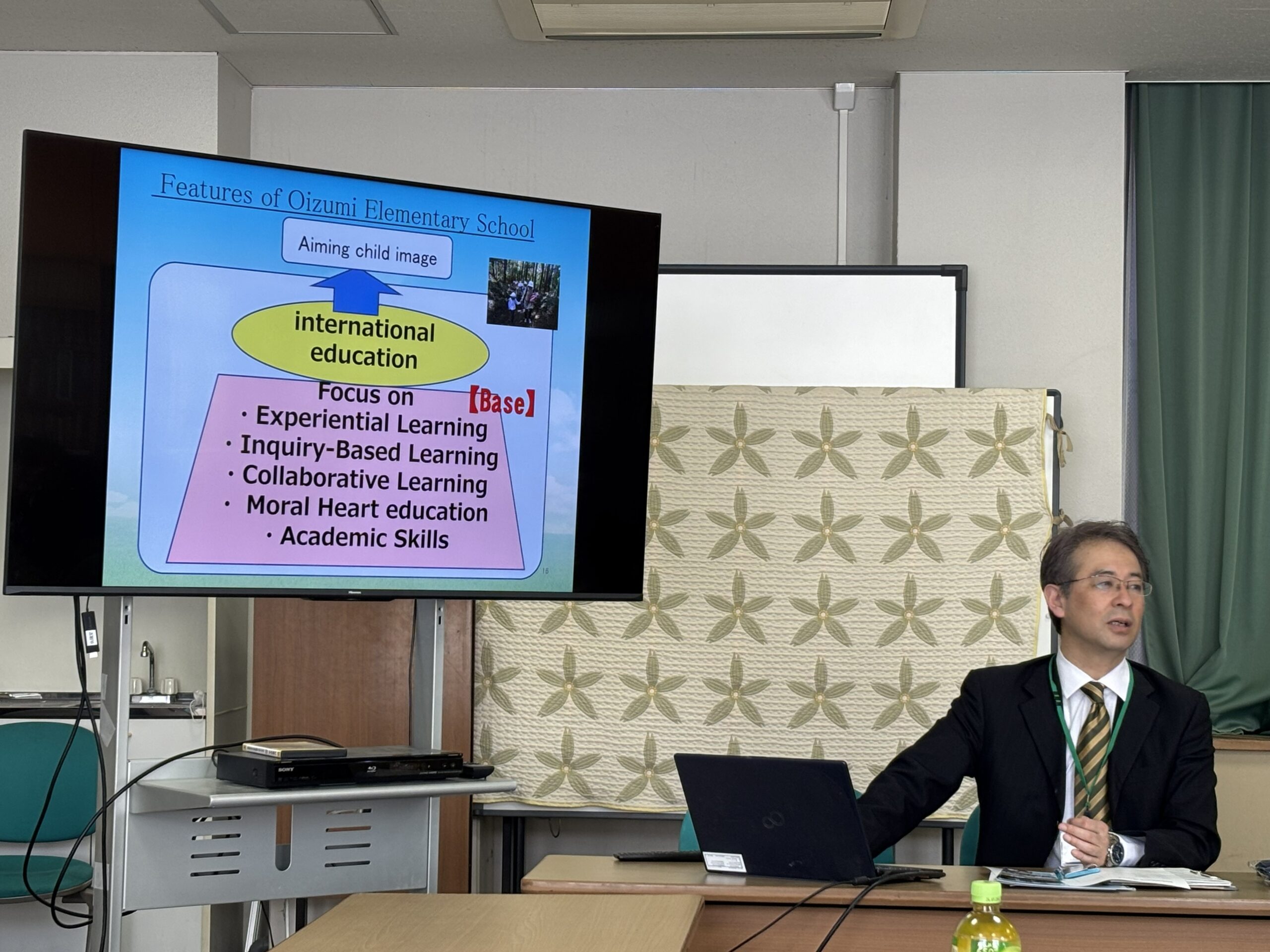 Vice-Principal Hosoi gives a brief description of the school
 -
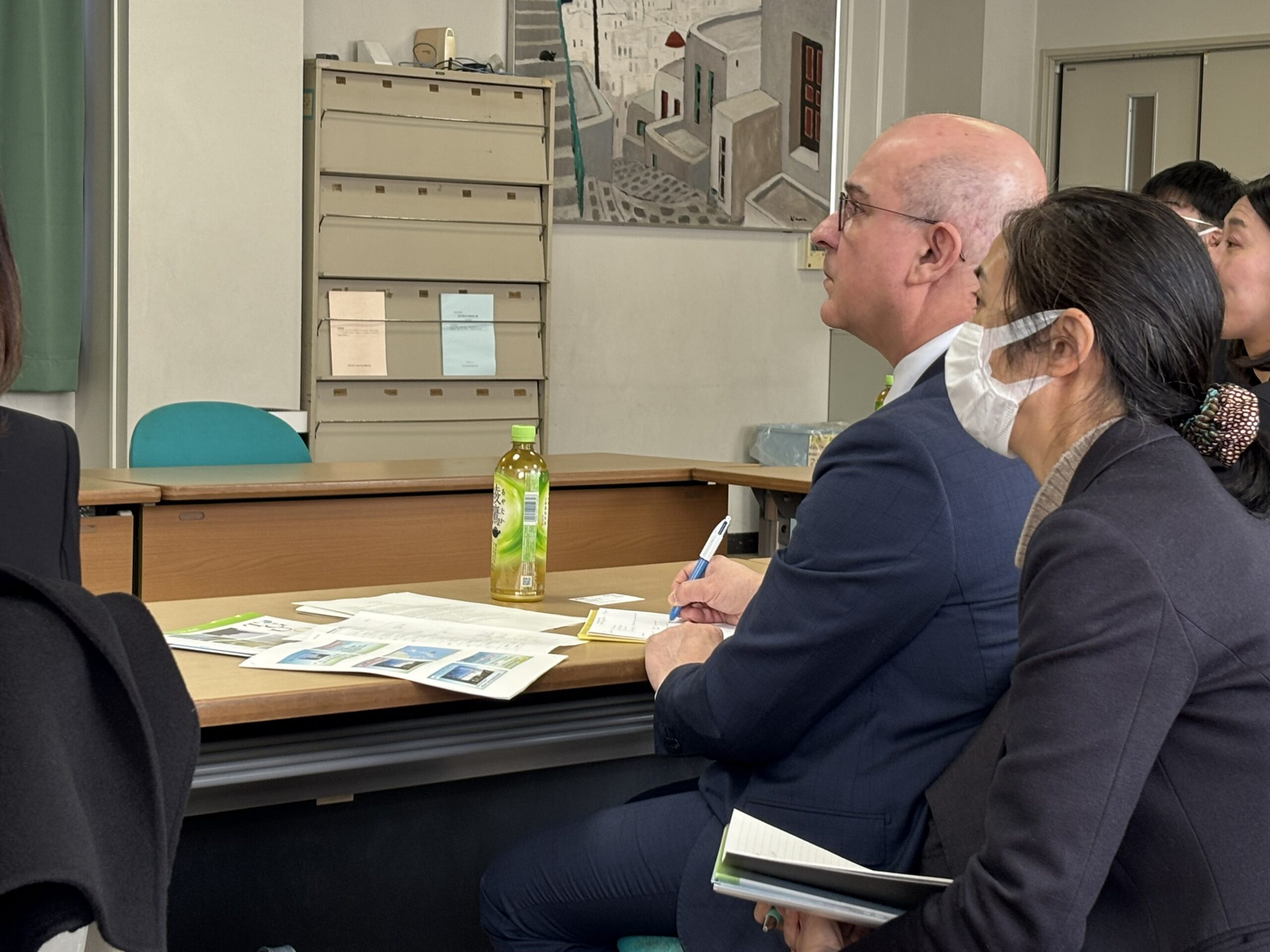 Mr. Santiago listens to the description of the schoolくサンティアゴ課長
After the brief description of the school, Mr. Santiago observed some classes and was shown around the inside of the school. In addition to observing a second-grade Music class (chorus singing and melodica) and a fifth-grade Home Economics class focusing on food education, he gained a deeper understanding of how Japanese school education aims to foster a balanced development of knowledge, morality, and physical well-being through conversations with students in a third-grade Science class, and by joining in a game of “Tenipin” (Note 3) in a fifth-grade PE class.
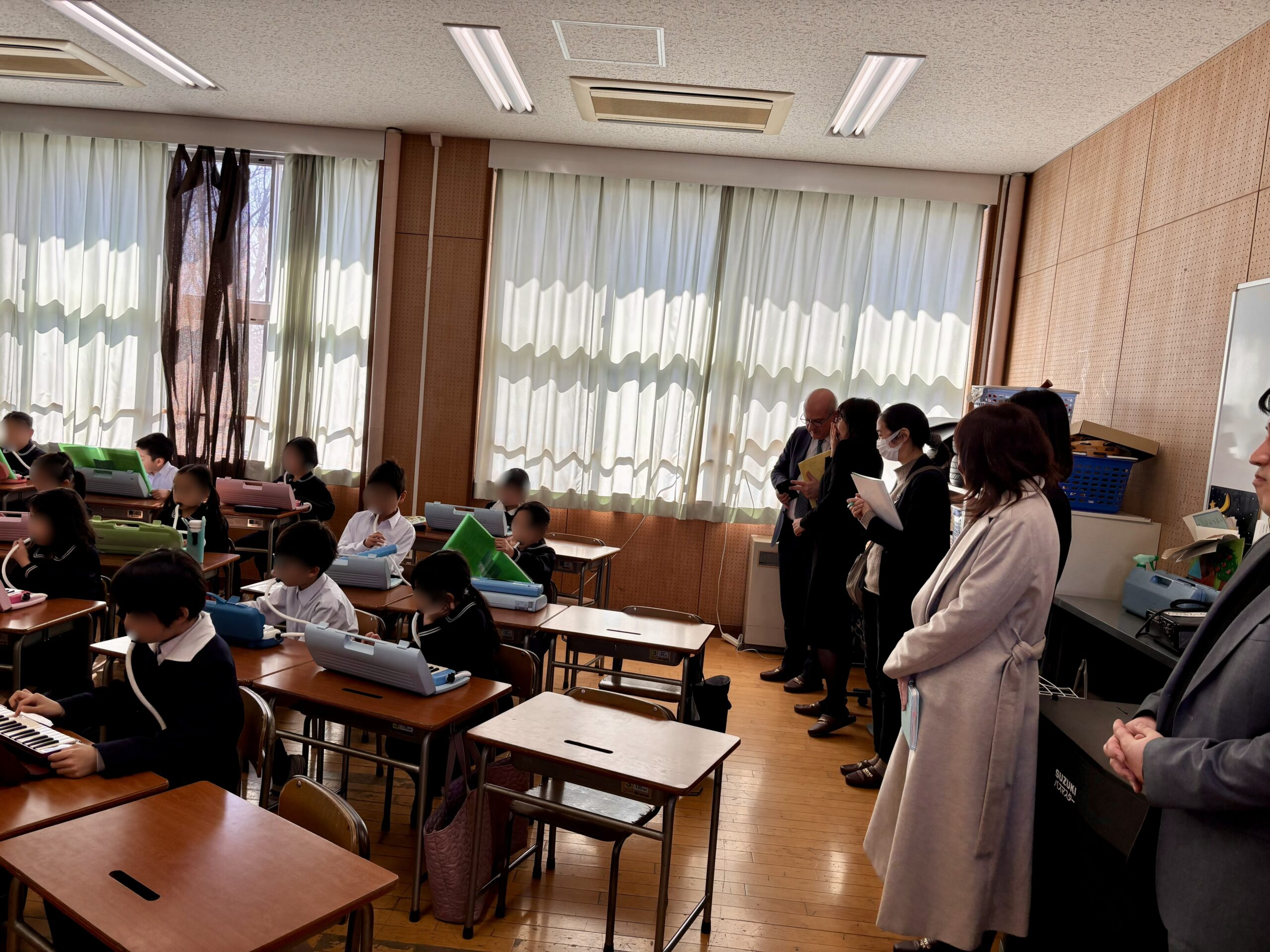 Observing the Music class
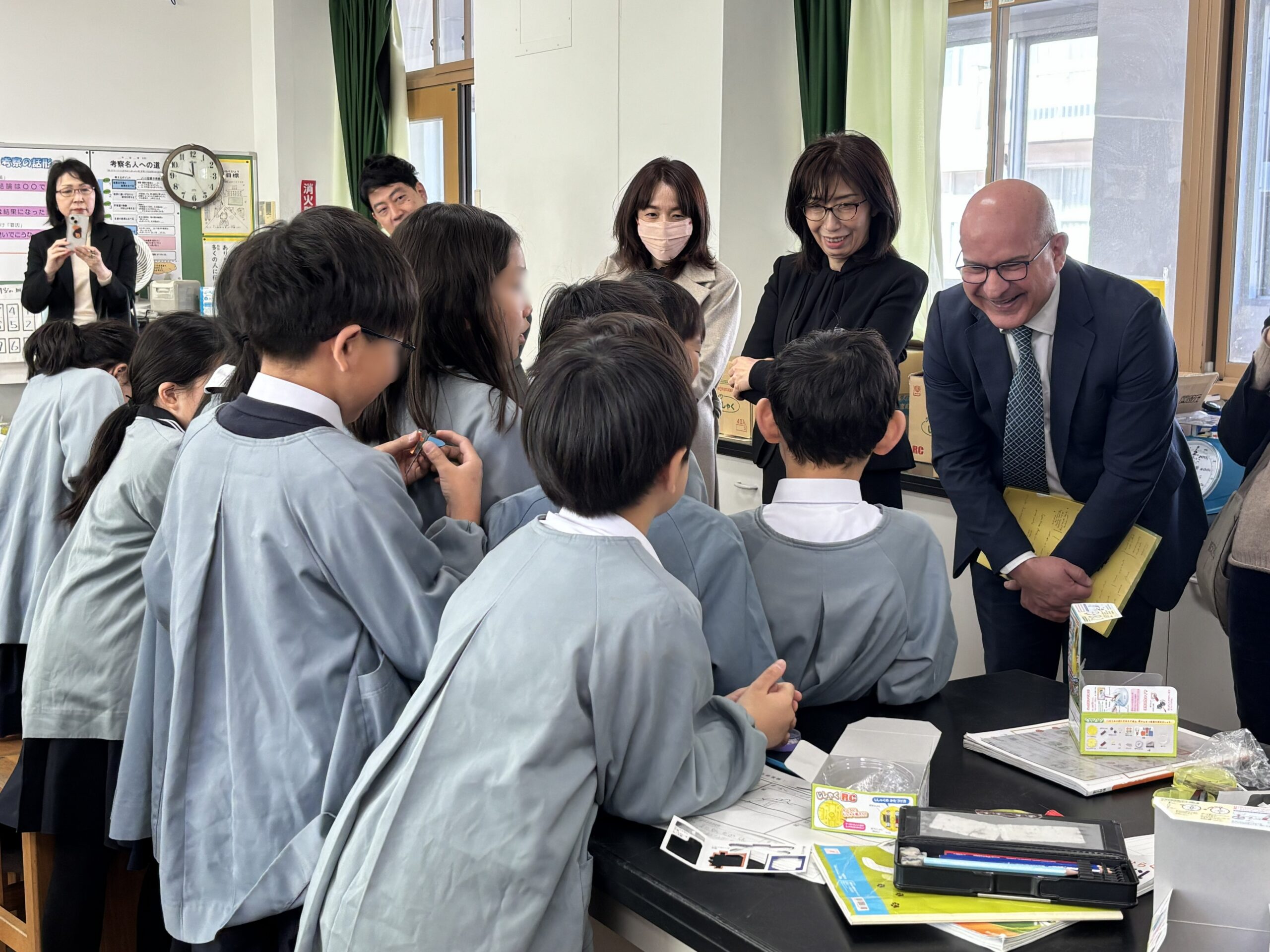 Talking with the children in the Science class
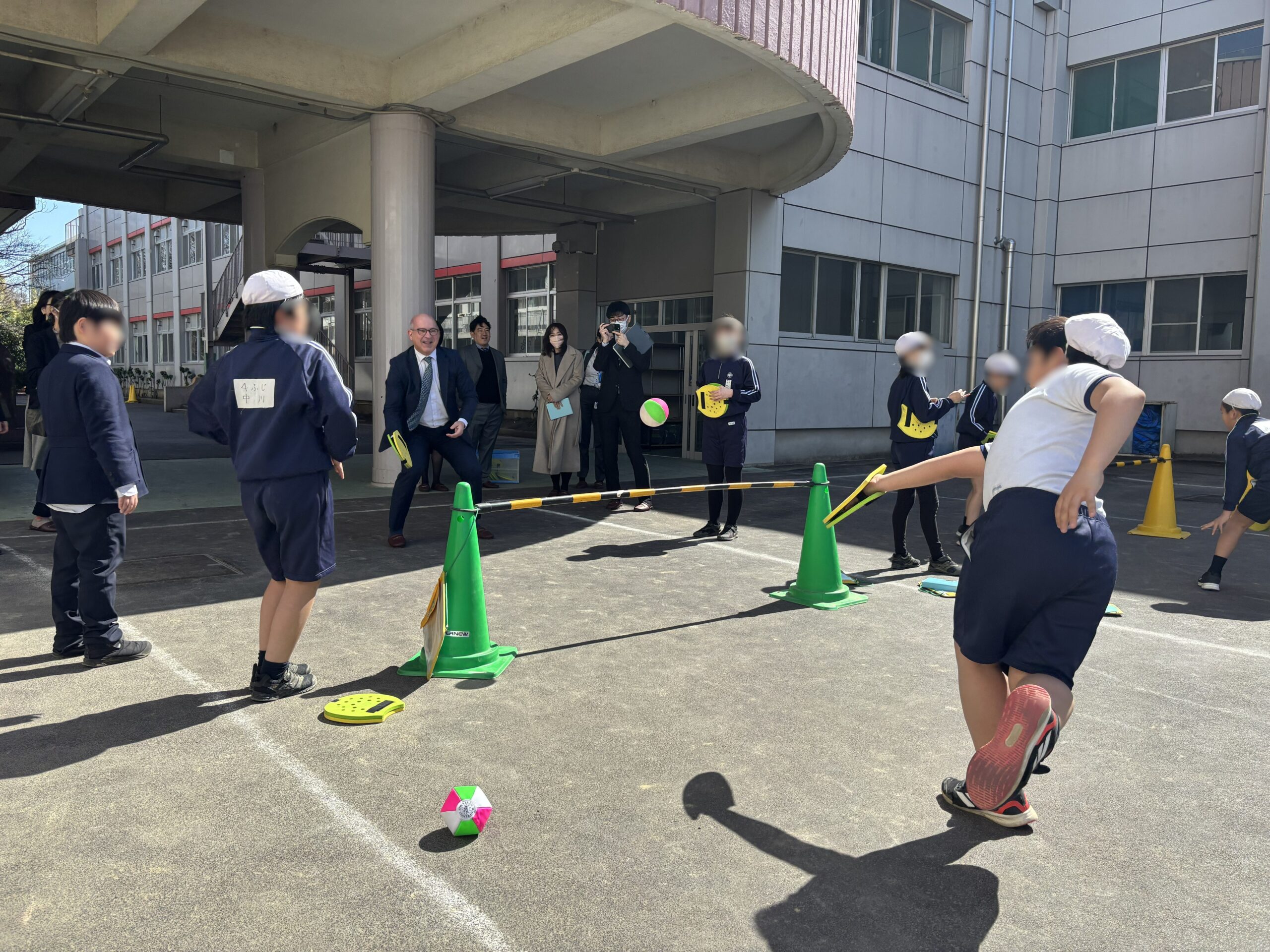 Taking part in a PE class
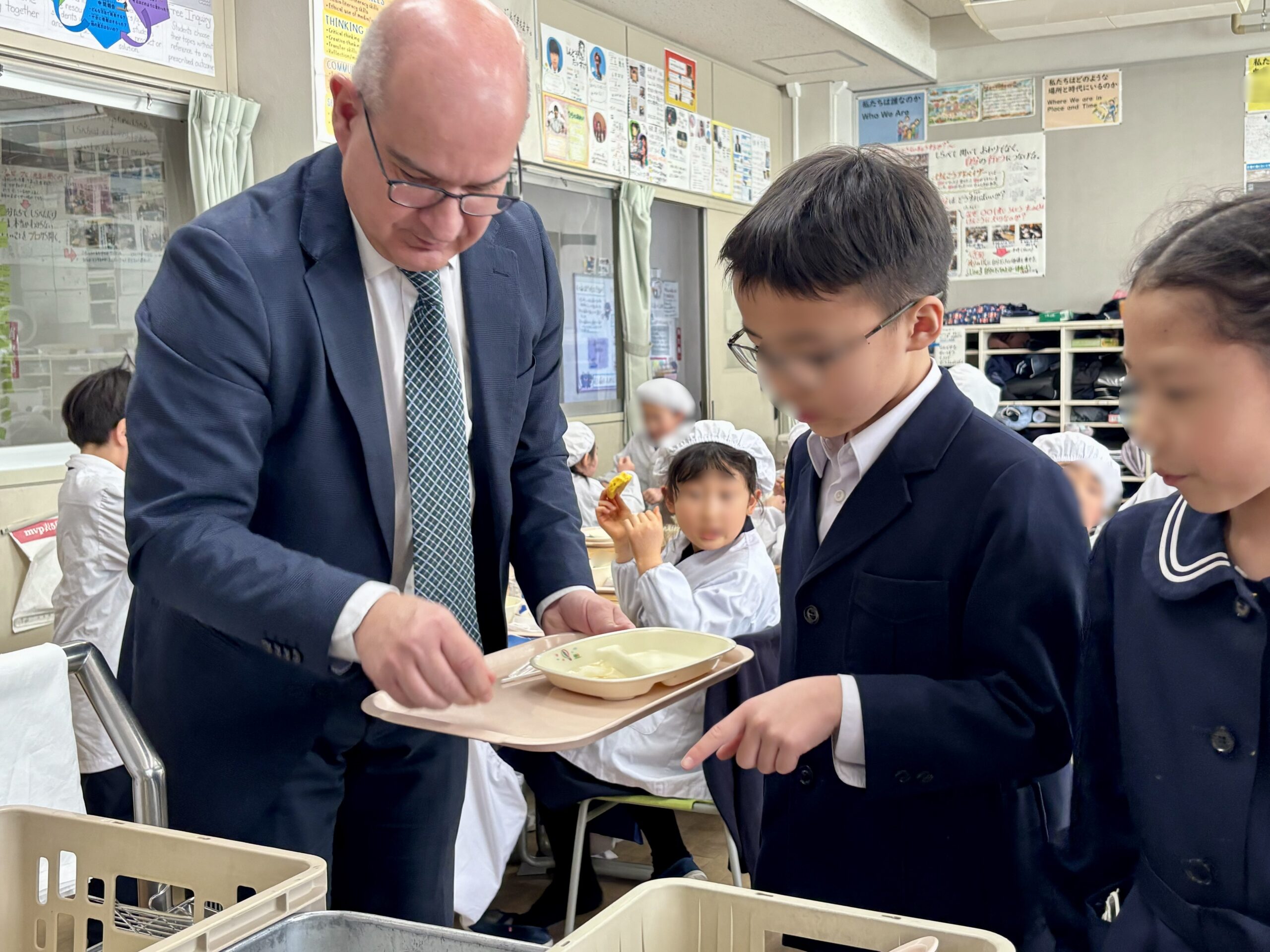
Following that, he partook lunch with 2nd graders. In Japanese schools, the students themselves take care of serving the food and clearing up afterwards. Further, in addition to developing knowledge about food and how to make food choices, children learn to appreciate the people involved in the production and cooking of the ingredients and to be thankful for the animals whose lives are sacrificed. Mr. Santiago also helped with the serving and clearing up, and the Diet and Nutrition teacher explained to him how school lunch is devised to support the students’ health while ensuring their safety. Mr. Santiago expressed the opinion that “School lunch is a very distinctive part of Japanese education”.
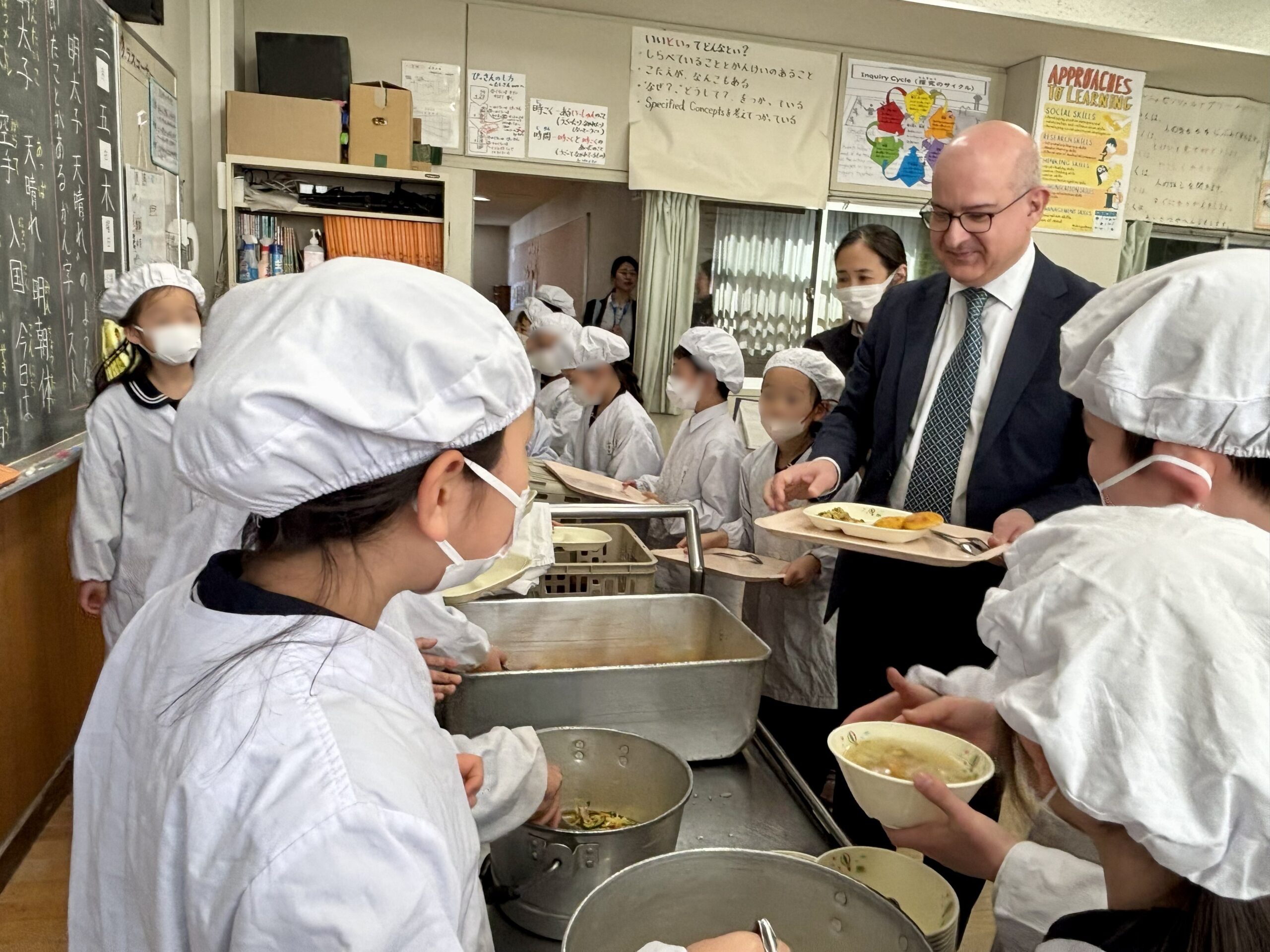 Serving school lunch
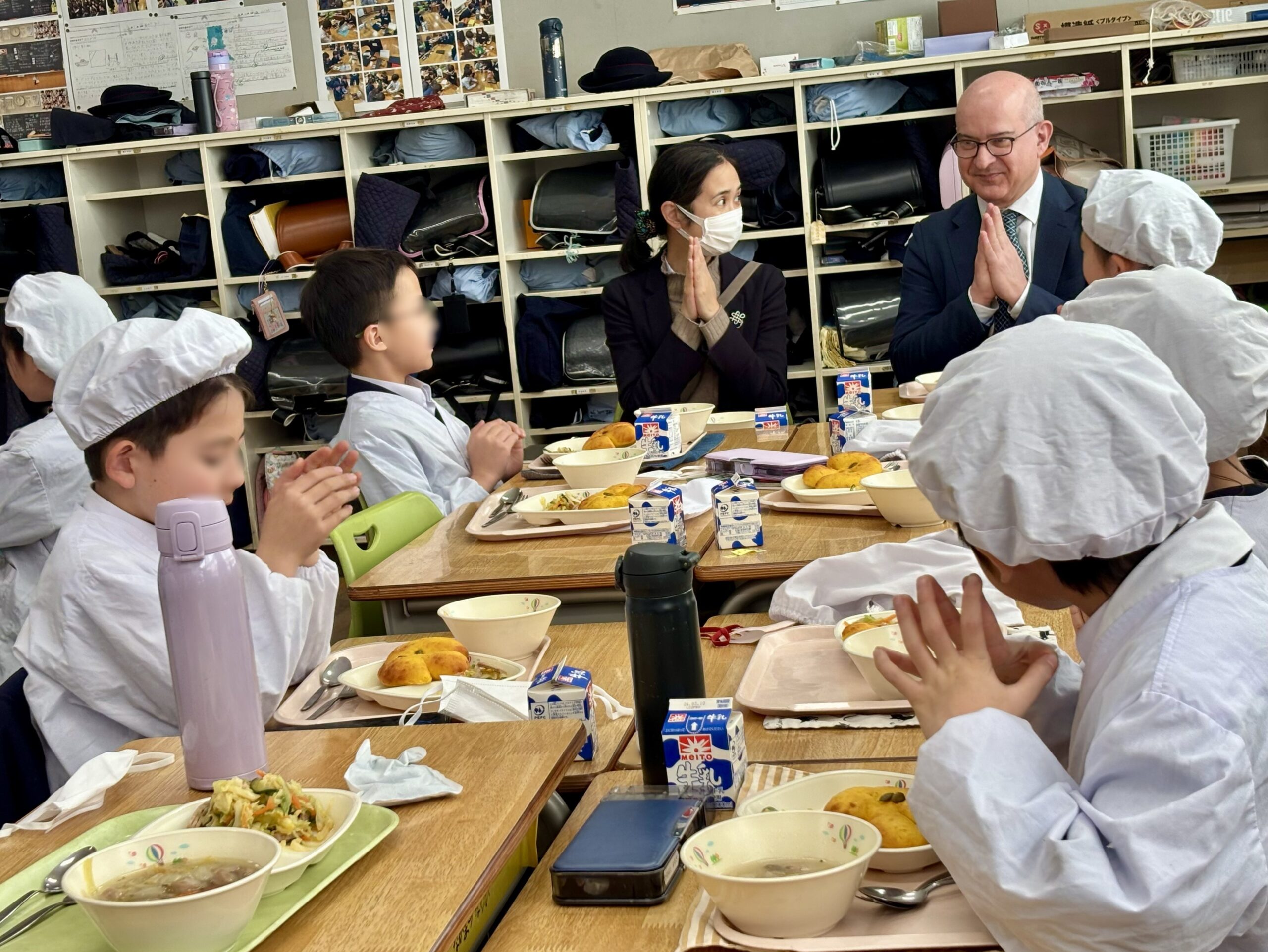 Enjoying lunch together
 Cleaning up after lunch
After lunch, Mr. Santiago observed cleaning activities. It was explained to him that cleaning instils in children the ability to cooperate with others and an awareness of the need to treat public spaces with respect.
During the Q&A session, there were questions about the number of students with international backgrounds, issues related to diversity, and the school’s engagement with parents. Vice Principal Hosoi explained that the number of students with international backgrounds has been increasing each year, and that the countries where they have previously lived are becoming more diverse. He also noted that the school supports these students’ learning by providing individualized follow-up in subjects such as Japanese language, writing kanji, and mathematics, while ensuring that they learn together with other students in experiential subjects such as physical education, music, and art. And with regard to the school’s engagement with parents, he explained that in addition to regular parent-teacher meetings and individual consultations being held, school events etc., were undertaken with the cooperation of the PTA (Parent-Teacher Association).
Through this visit in which he observed classes, interacted with the students and experienced school life, Mr. Santiago gained a deeper understanding of how Japanese schools promote a balanced development of knowledge, morality, and physical well-being in an increasingly diverse educational environment. EDU-Port Japan takes advantage of opportunities for overseas education professionals to visit Japan, and will continue to promote Japanese-style education initiatives abroad.
Note 1 : An international educational program offered by the International Baccalaureate Organization (Headquartered in Geneva)(https://ibconsortium.mext.go.jp/en/about-ib-en/)
Note 2 : A school approved for membership of ASPNet (Associated Schools Network) which was established to instill the ideals of UNESCO into the school setting.(https://www.unesco-school.mext.go.jp/schools/en/about-unesco-aspnet/)
Note 3 : A game in which players hit a sponge ball back and forth with a sponge or cardboard racket fitted over the hand.(https://www.jta-tennis.or.jp/teni_ping/about/)