Ichimura Senior High School’s Project, ”Tackling SDGs Through Interaction and Dialogue-Oriented Learning,” was selected as an EDU-Port Japan Supported Project in 2023 and 2025. It involves interactive dialogue-oriented learning using ICT with its partner schools (National FongShan Senior Commercial & Industrial Vocational School (FSVS) in Taiwan and Koshigaya Kita High School in Saitama)
The EDU-Port Japan Secretariat interviewed three teachers from Ichimura Senior High School and FSVS about the significance and outcomes of the project, including how the students changed during the course of the project and what the teachers at each school learned from one another through international collaboration.
■Project Overview
The three partner schools jointly study international issues such as the global refugee crisis and global poverty. With the cooperation of companies, experts and local communities, they are working to support the well-being of people facing such challenges in Cambodia and Jordan.
In Cambodia, the schools have donated swings and handwashing stations to impoverished areas. Funding came from proceeds raised through charity activities conducted by the students. An online study session was also held with the JICA Cambodia Office, enabling students to hear directly from local people and engage in “real-world learning.”
In Jordan, the schools have carried out several initiatives, including outreach classes as part of a “Power of Clothing” project, a participatory learning program led by Fast Retailing (UNIQLO) and UNHCR (United Nations High Commissioner for Refugees); donations of supplies to schools in UNRWA Palestinian refugee camps; and online learning and cultural exchange sessions with teachers and NGO staff who have visited refugee women’s workplaces. In addition, in collaboration with Tribalogy, a company that supports Syrian and Palestinian refugee women, the schools have organized charity sales of handicrafts made by refugee women at school events.
■Catalyst for Collaboration Between Japan and Taiwan
In 2023, Ichimura Senior High School signed a partnership agreement with Koshigaya Kita High School and National FongShan Senior Commercial & Industrial Vocational School (FSVS) in Taiwan. Since then, the three schools have worked together on international support activities. Looking back on that time, Mr. Hsu Chih-Yao of FSVS commented:
”We were already collaborating with Ichimura Senior High School on the UNESCO Peace Project, an experience that taught us the appeal of ESD (Education for Sustainable Development). I was very impressed by the personality and energy of Mr. Itaru Matsuno, a teacher at Ichimura Senior High School, who promotes “independent, interactive, and in-depth learning,” a key feature of Japanese education. Because of the strong bond of trust and friendship between the teachers and students of our two schools, when Mr. Matsuno proposed furthering our activities as partner schools, it was a natural step for us to accept. I believe that the ultimate goal of education is the realization of a more equitable and peaceful society.”
■Changes Observed in the Students Through the Activities
Regarding changes in the students’ awareness and behavior as a result of the support activities, Mr. Hsu commented, “Through these activities, we increasingly saw students researching, thinking, and sharing their ideas in English and Japanese. I was struck by how happy they looked to connect and understand each other through their own words.” He believes that these changes helped the students realize that they can make a contribution to society, and this realization boosted their confidence in learning.
On the same point, Mr. Tetsuya Yamaguchi of Ichimura Senior High School commented, “The students are aware that they are working to raise public awareness of global issues such as refugees and poverty, and the younger students have inherited this commitment. Through the activities, they appear to be learning the importance of maintaining an equal footing between the people providing support and the people receiving support, and of walking side by side as partners.”
-
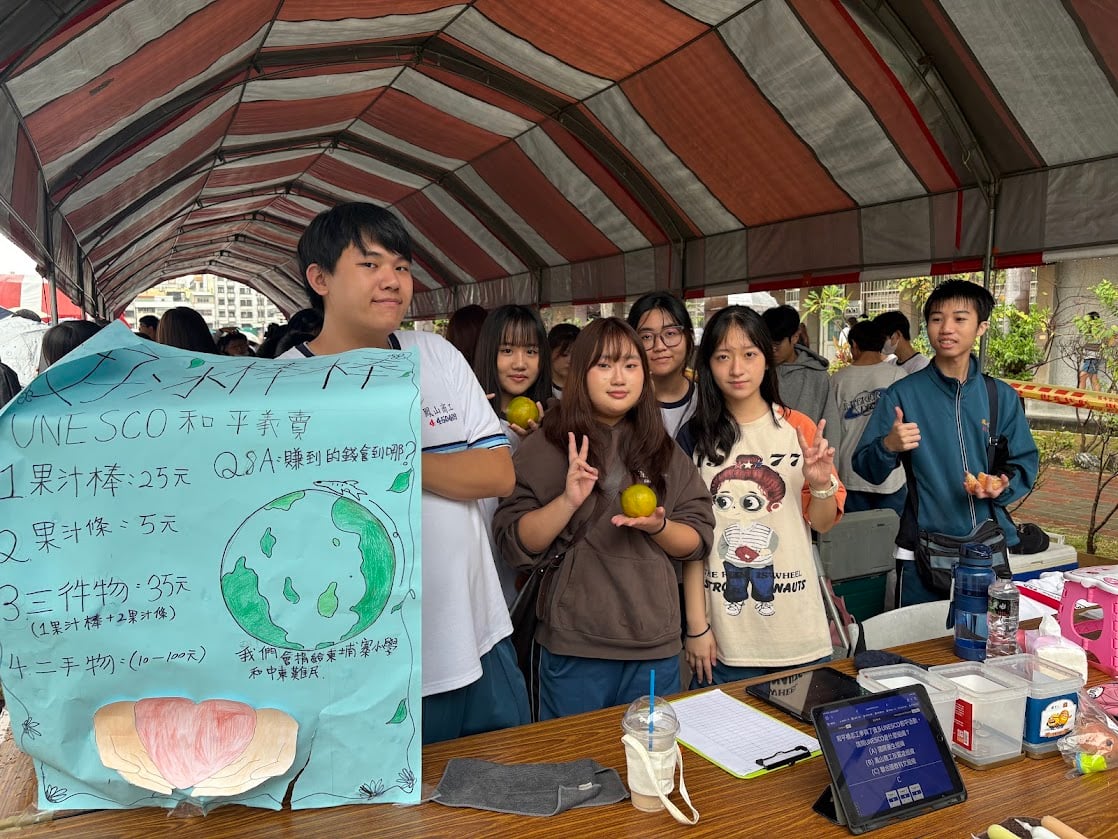 Charity activities at FSVS (Taiwan) ①
 -
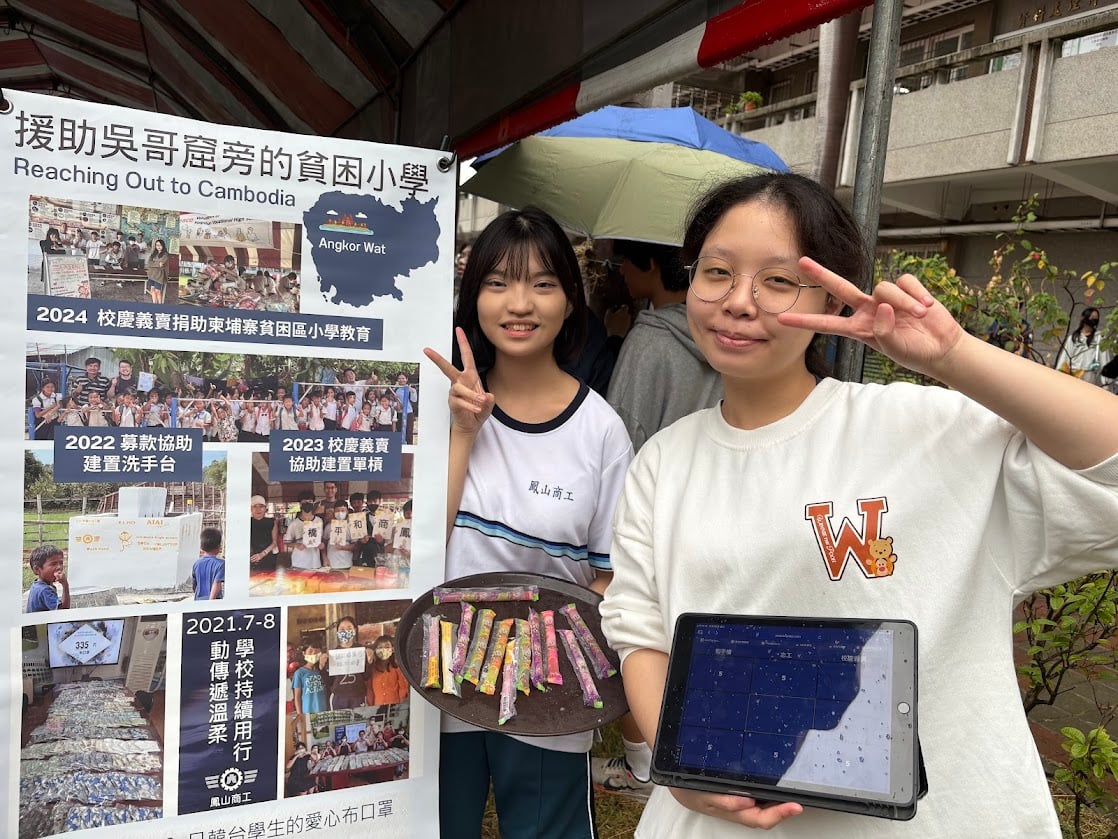 Charity activities at FSVS (Taiwan) ②
-
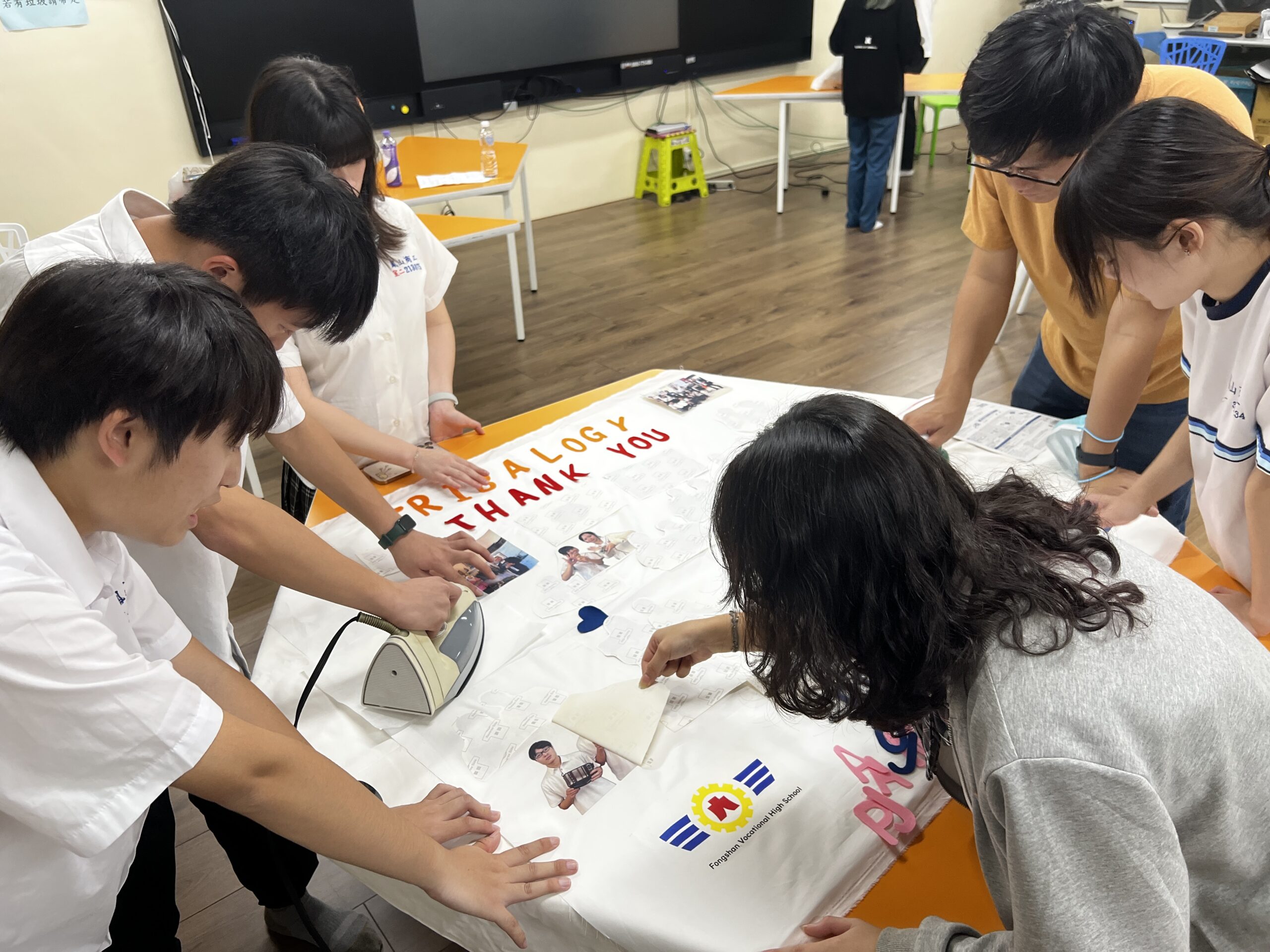 Making a support banner for Syrian and Palestinian refugee women (Taiwan)
 -
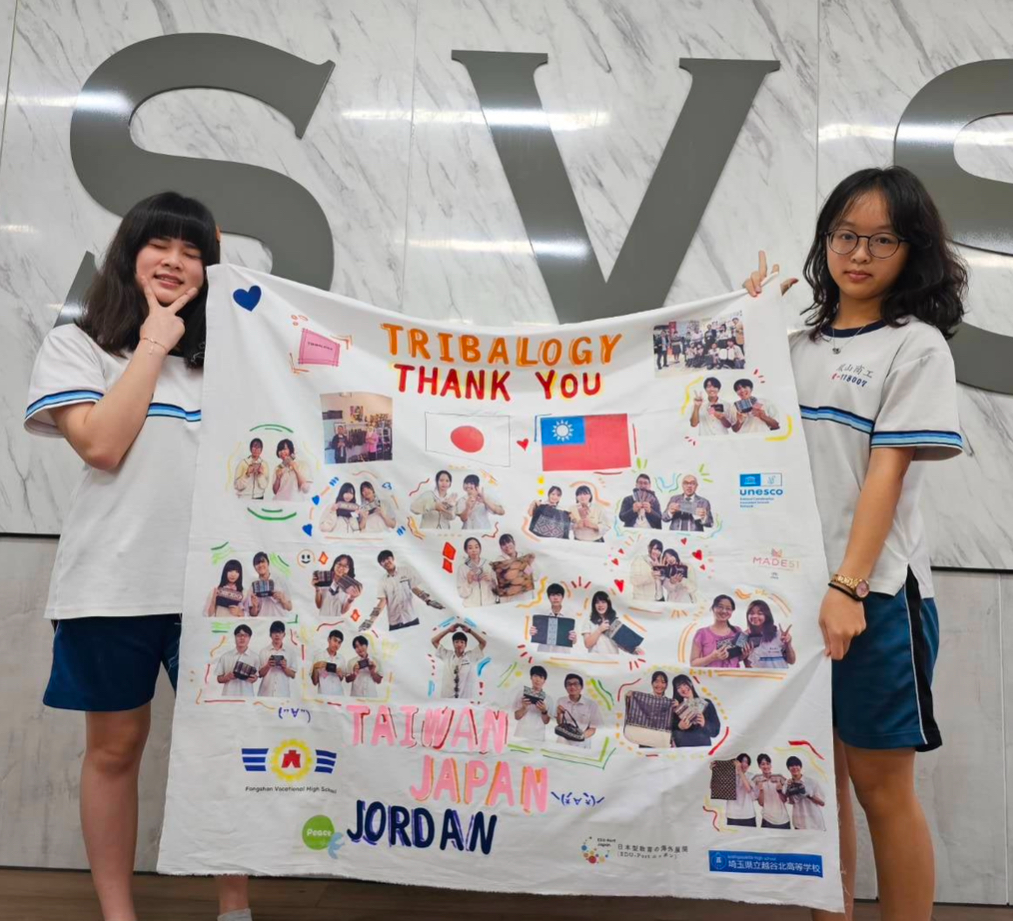 Support banner jointly designed and completed by Japan and Taiwan (Taiwan)
■Challenges and Achievements of Collaboration
Before the partnership began, FSVS faced the challenge of weakening relationships among students in the age of the digital society, along with a declining interest in social issues. By engaging in international support activities with Japanese high schools and having the opportunity to exchange ideas and work together with their peers, the students gradually developed an interest in social issues and an awareness of collaboration. Mr. Hsu feels that “by actively utilizing ICT and connecting learning to real action, we are gradually overcoming these challenges and promoting ESD.”
Ichimura Senior High School, which initiated the partnership agreement, initially wondered to what extent the students at the partner schools knew about and understood Cambodia’s historical background or Jordan’s refugee crisis, and they examined ways of making these issues personally relevant to them. To increase the students’ exposure to the current global situation and global issues, Ichimura Senior High School provided opportunities to watch news reports and historical documentaries, and listen to online talks by people actually engaged in support activities at companies, international organizations, NPOs and NGOs. The students achieved in-depth learning through repeatedly engaging in such activities.
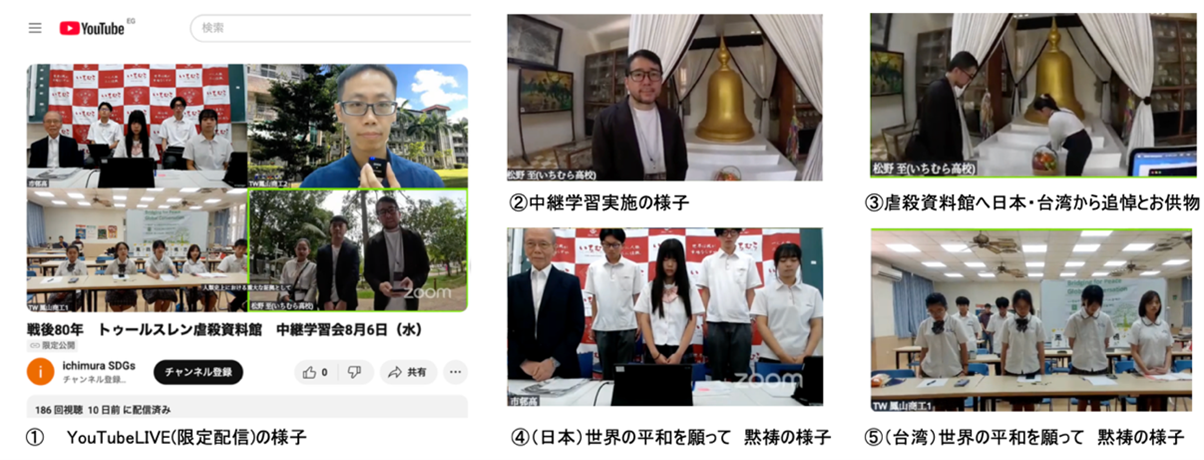
SDGs Global Dialogue by High School Students: Live study session from Tuol Sleng Genocide Museum, A learning session connecting Taiwan, Japan and Cambodia streamed live on YouTube (Cambodia)
■Mutual Learning by the Teachers Through Educational Activities
Collaboration with schools both in Japan and abroad brought many insights and changes not only to the students but also to the teachers. The Taiwanese teachers learned a great deal from the Japanese teachers’ inquiry-based lesson design and respect for student autonomy, and became more aware of creating lessons that allow students to ask questions, think, and share their ideas. The Japanese teachers, in turn, came to appreciate the importance of maintaining regular opportunities and relationships that allow for open discussion, not only among the students but also among themselves, in order to carry out sustainable international support projects. While guiding students in the collaborative activities, the teachers themselves have come to appreciate the value of international co-creation.
-
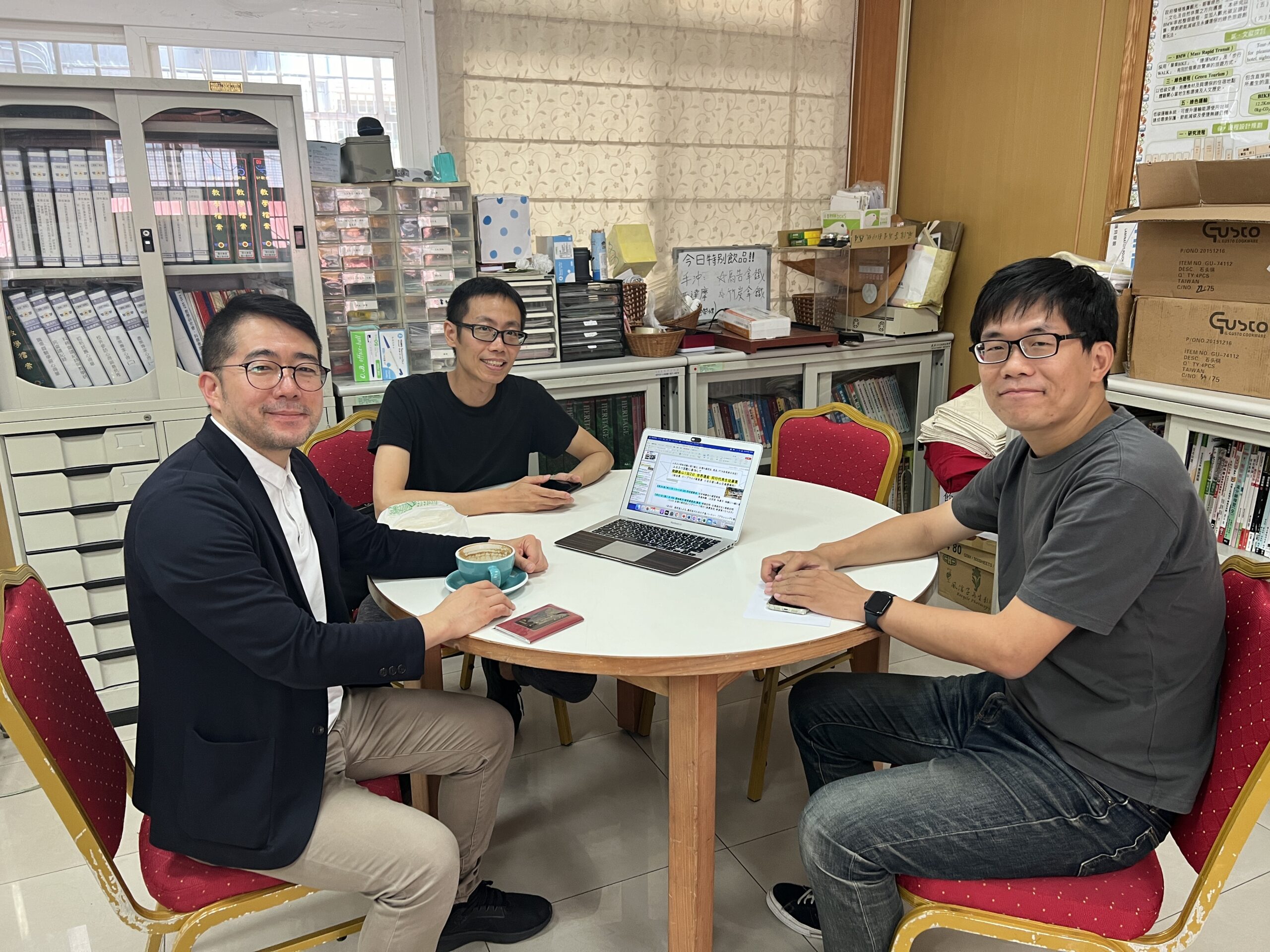 Meeting at FSVS (Taiwan)
Mr. Matsuno (left) from Ichimura Senior High School, Mr. Hsu (center) and Mr. Lin (right) from FSVS -
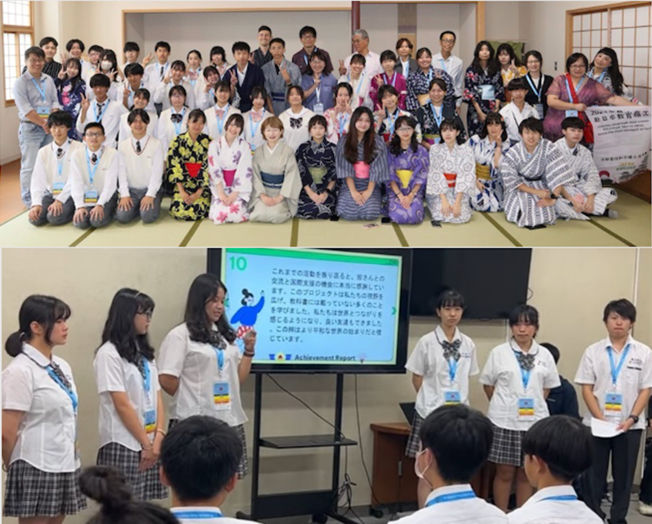 (Top) UNESCO Urasenke Tea Ceremony Cultural Experience (Japan)
(Bottom) Joint international support activity report session at Nagoya Board of Education (Japan)
Mr. Hsu of FSVS feels that through the activities, the mindset of the teachers shifted from “teaching” to “learning and growing together.” He also says that he realized once more the importance of fostering international understanding and empathy through education. As the teachers’ support activities gradually became known throughout the school, more staff members began to actively and voluntarily participate in collecting supplies and used clothing, purchasing handicrafts made by refugee women, organizing bazaars to support schools in Cambodia, and other activities, thus strengthening the sense of solidarity across the entire school.
At Ichimura Senior High School, in addition to the student-led UNESCO Committee, a new organization composed of teachers called the UNESCO Peace Education Promotion Department was established. As a result, the purpose of the international support activities, namely fostering students’ awareness of peace, became more widely recognized within the school. With the establishment of the new organization, what initially began as an initiative led by the social studies teacher and students from certain grades developed into a school-wide project, and many more teachers now understand the purpose of the activities and actively participate in them.
■What the Teachers Gained Through the Activities
Talking about what he gained through working with the partner schools, Mr. Hsu commented, “I was reminded that education is not merely about transmitting knowledge, but about nurturing connections between people. Seeing the students gain confidence and show consideration for others through their actions has become a driving force for me as an educator. The time spent sharing our hopes for peace and exchanging experiences with teachers from our partner schools has been a most valuable learning experience for me.”
He also had the following message for teachers considering similar supportive actions.
”International support activities may seem difficult at first, but it is important to start with one small step. Focusing on the realities of others and on different cultures, and empathizing, thinking, discussing, and taking action will naturally unlock the kindness and potential that lie dormant in your students. I believe that this first step will lead to a concrete step toward a better future.”
Mr. Yamaguchi of Ichimura Senior High School said that witnessing the strength of the students’ motivation to overcome language barriers as fellow “global citizens” taught him the importance of taking on challenges. In addition, he felt that interacting with teachers of other subjects through this project had broadened his own perspective.
He too had a message for teachers at other schools who are thinking about launching similar initiatives.
“With the development of ICT tools, language barriers are lower than ever before. I recommend starting with simple interaction. In 2021, when we began interacting with Taiwan to promote cross-cultural understanding, students’ awareness quickly shifted to social issues, leading to discussions about how they could support impoverished communities hit by the COVID-19 pandemic. I believe what we as teachers must do is believe in our students and create opportunities for them to think for themselves. We would be delighted if you would become a partner school and join us in our support activities.”
-
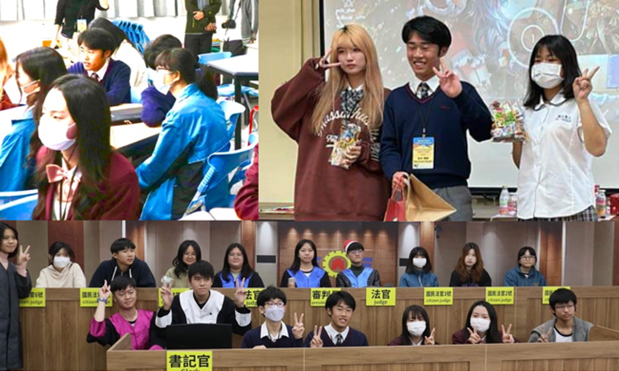 Joint international support activity report session and school visit (Taiwan)
 -
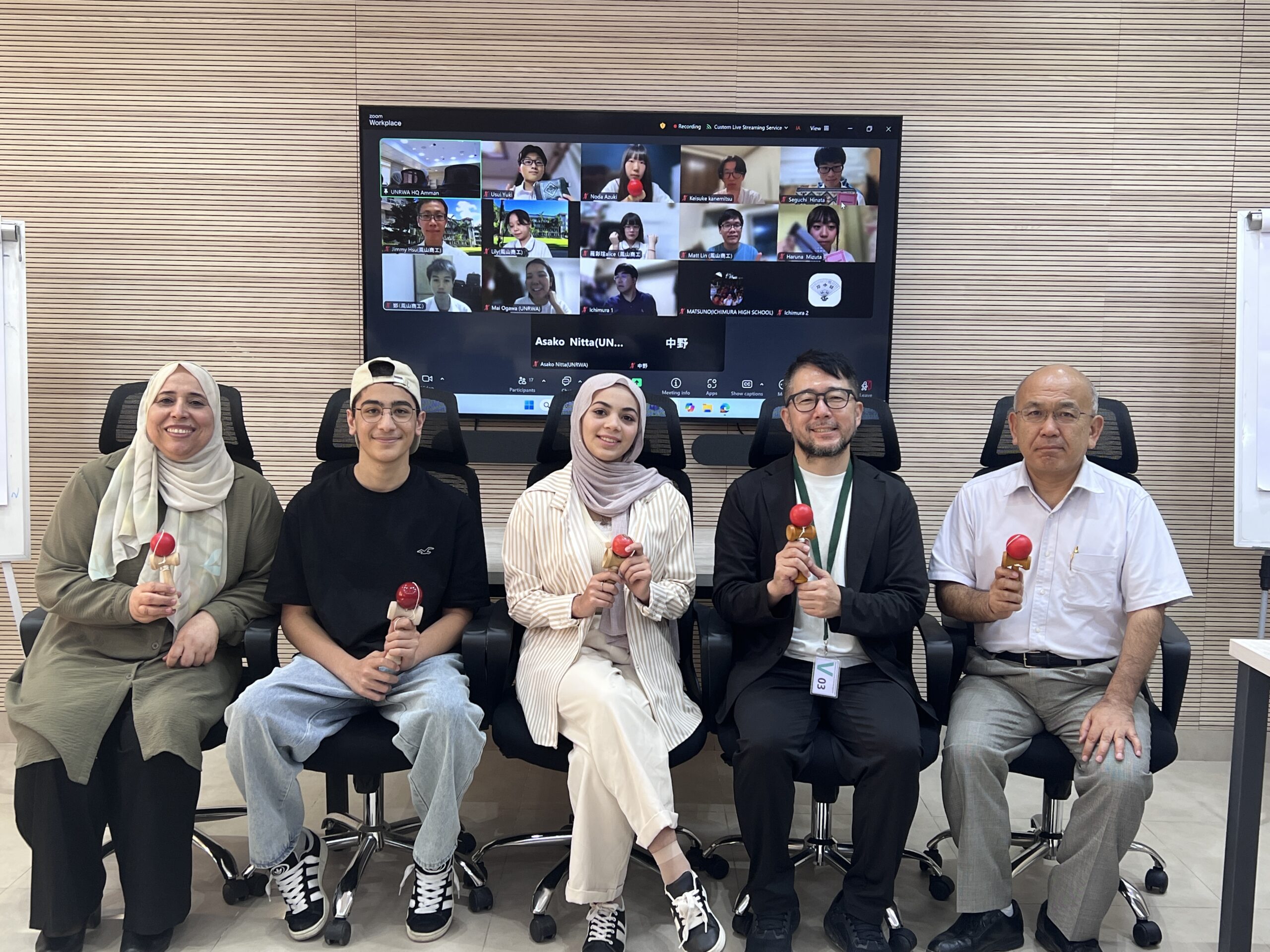 2025 UNRWA study session and exchange program (Jordan)
-
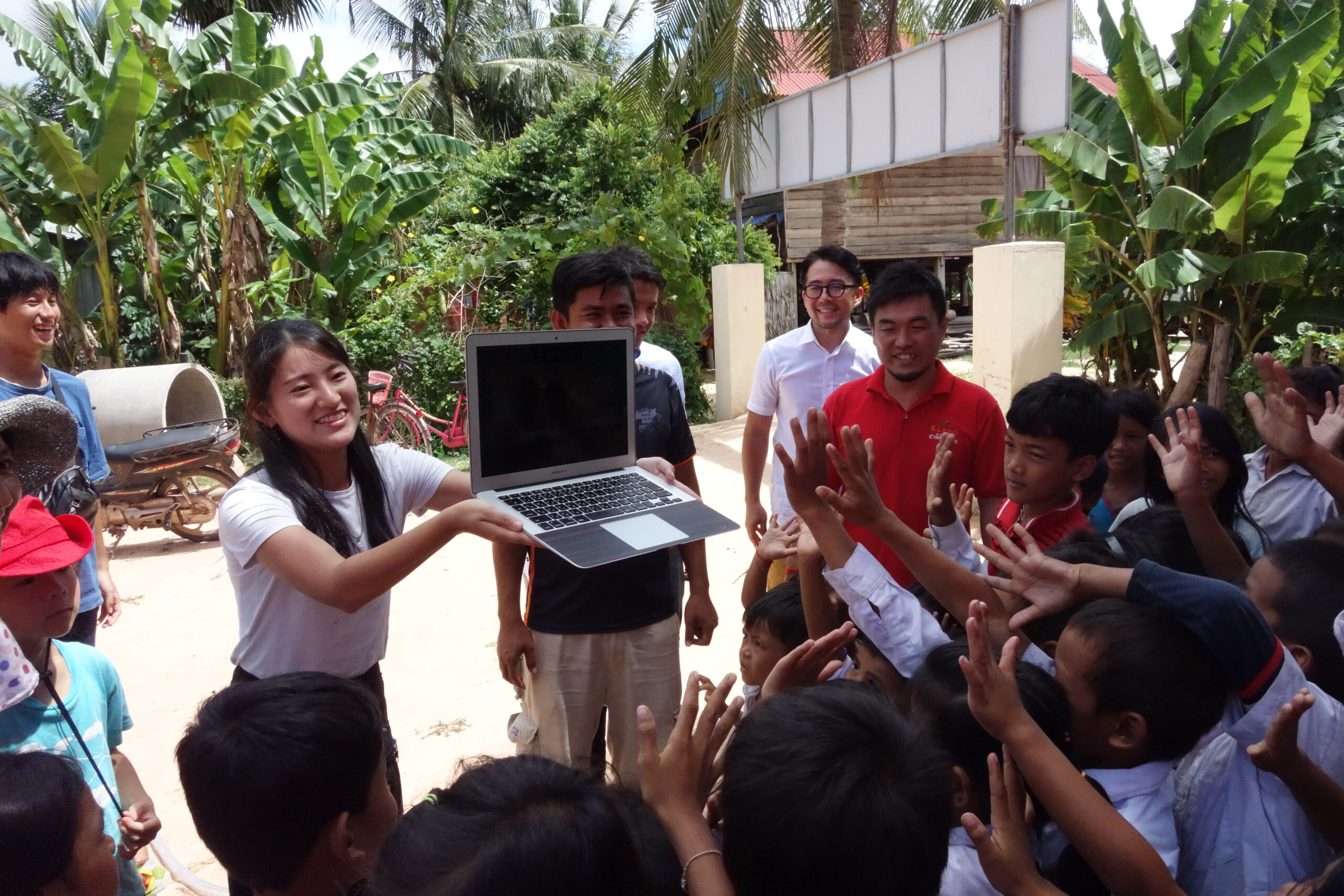 Online interaction with children at a public elementary school in an impoverished area
■The Significance of Cross-Border Educational Practices Among Teachers
Finally, we spoke with Mr. Itaru Matsuno of Ichimura Senior High School (Head of the school’s UNESCO Peace Education Promotion Department), who has played a central role in this project, about the significance of cross-border educational practices among teachers.
The preamble to the UNESCO Constitution declares that “since wars begin in the minds of men, it is in the minds of men that the defences of peace must be constructed.” Together with our partner schools in Taiwan and Japan, we have been working to put into practice the principle of “building the defences of peace in our minds.”
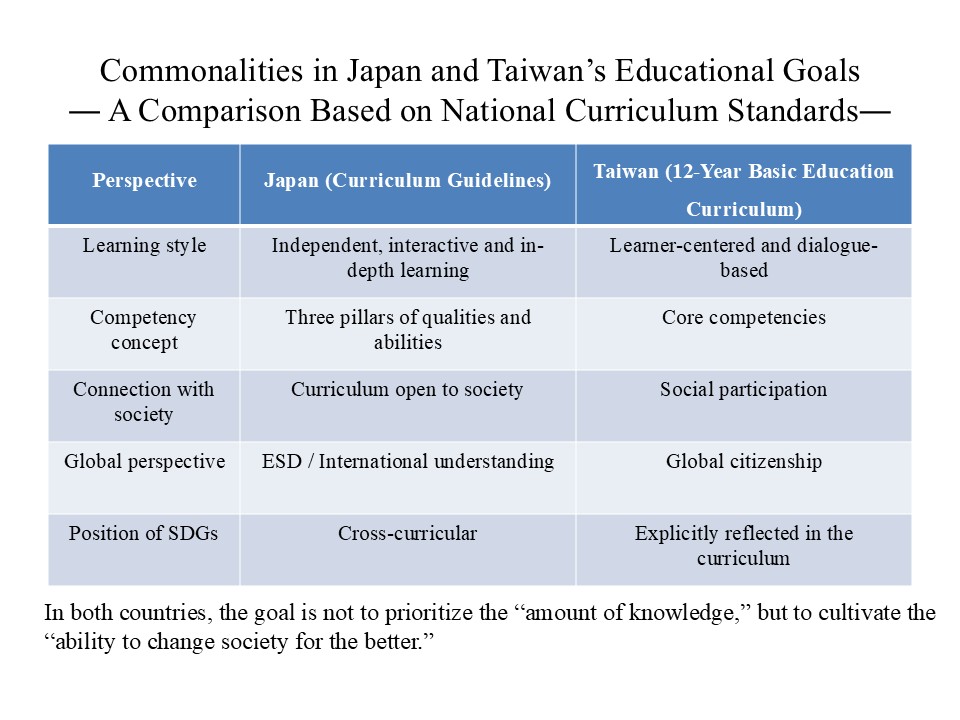
(Created by Mr. Matsuno of Ichimura Senior High School and Mr. Hsu of FSVS)
As shown in the figure above, both Japan’s Curriculum Guidelines and Taiwan’s 12-Year Basic Education Curriculum emphasize independent, interactive and in-depth learning, inquiry, social participation, and nurturing the leaders of a sustainable society, demonstrating a high degree of commonality in their educational goals. Based on this common foundation, we have conducted practice-based international collaboration approach in which the teachers jointly designed annual lesson plans and unit goals, and shared and examined changes in students’ learning.
What proved particularly valuable was a dialogic practice that goes beyond treating international exchange as a one-off event or an exercise in cultural understanding, and instead links it to the improvement of the curriculum itself through collaboration and the joint co-creation of the future. By sharing lesson designs, assessment methods, and student understanding, the teachers gained the opportunity to objectively reassess their own school’s educational strengths and challenges. Through such international collaboration, they experienced the appeal of contributing to the “relativization of education” and “assurance of quality” that are difficult to achieve solely within a domestic context.
Furthermore, this project places emphasis on a learning process in which students proactively transition from “knowing” about global issues to “discussing, thinking and taking action.” The collaboration among teachers that supports this learning design serves as an important foundation for implementing transformative learning as advocated by ESD in schools.
In addition, ongoing dialogue among the teachers has facilitated the sharing of practical knowledge and the formation of networks beyond individual schools. This has the potential to develop into a sustainable mechanism for improving the quality of education across regions and borders, rather than relying on the efforts of individual schools.
Going forward, we aim to systematize and model the educational practices accumulated through this project and share them in a form that can be expanded to other schools and regions, contributing to a more equitable and peaceful society. We believe that the expertise, curriculum development skills, and collaborative leadership cultivated by teachers through international collaboration will also contribute to enhancing Japan’s ability to convey its educational approach to the world.
Cross-border professional learning among teachers not only improves the quality of students’ learning, but also cultivates the capacity of education itself to contribute to solving social issues. Amid increasingly complex global circumstances, we will contribute to building a next-generation model of sustainable international education through peace education grounded in the principles of the UNESCO Constitution and through ESD that fosters learner transformation toward the realization of a more equitable and peaceful society.
-
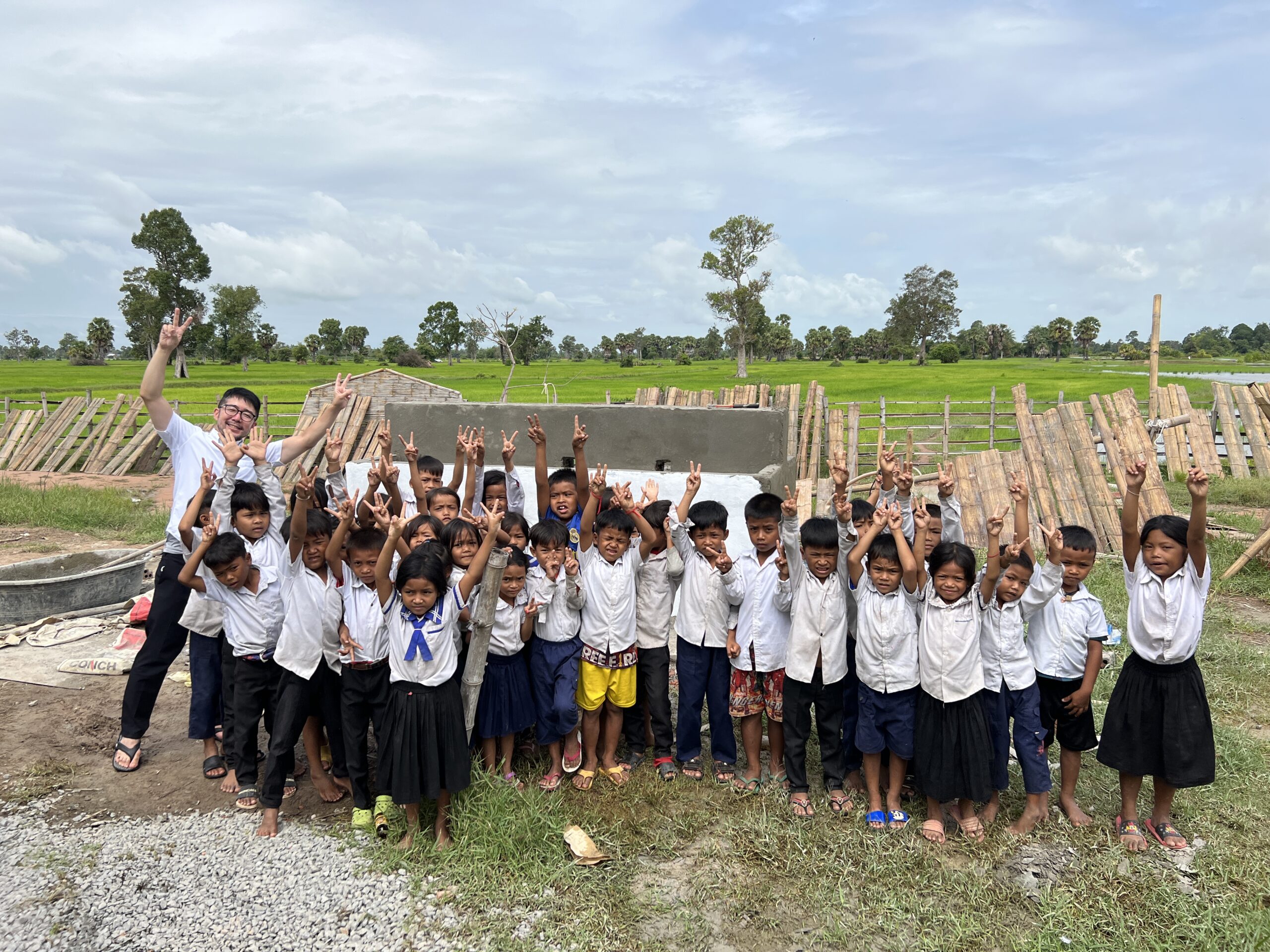 Donations from Taiwan and Japan
〜Mr. Matsuno with local children〜
(Cambodia) -
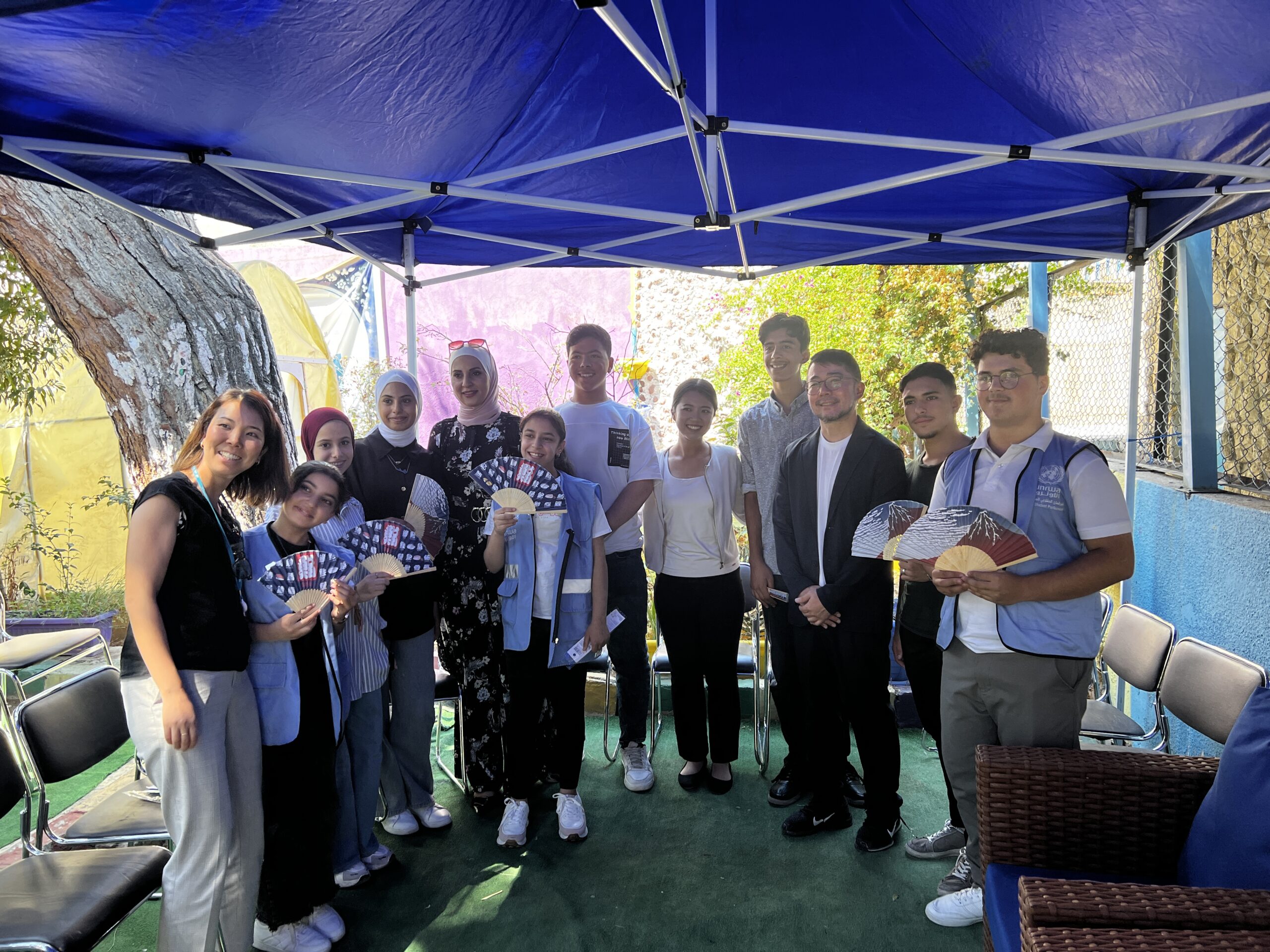 School in a UNRWA refugee camp
〜Mr. Matsuno with local children〜
(Jordan)